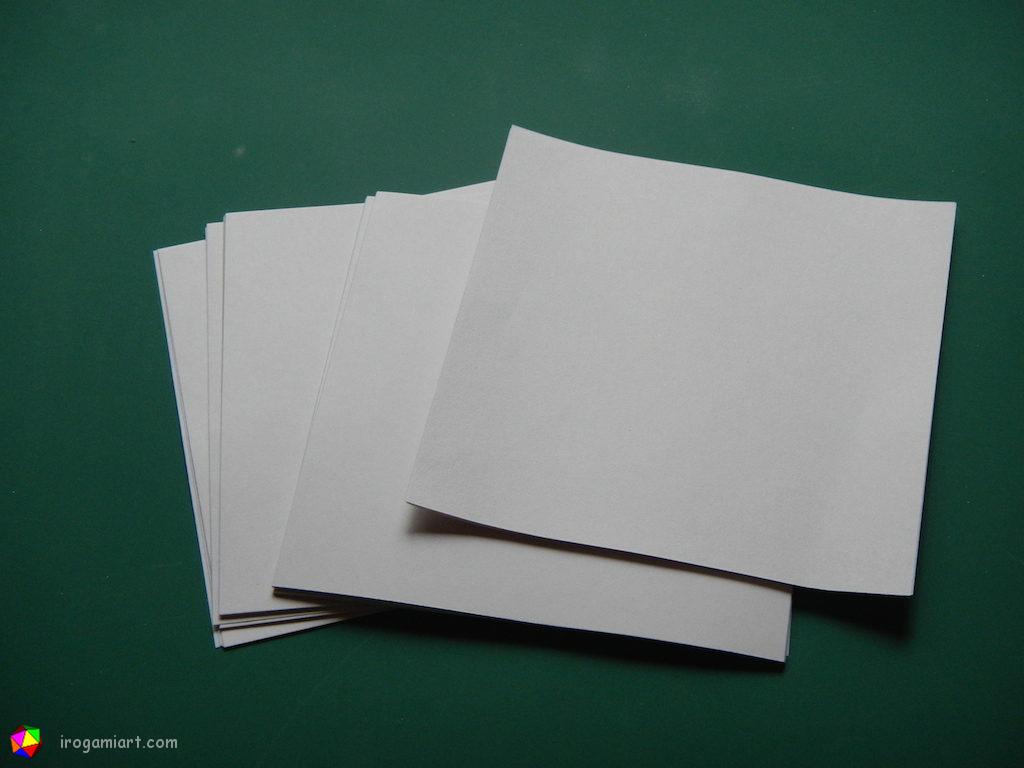
Boring white quadratic notepads are rough diamonds for creating nifty and creative artwork! Here a rough description of the making-off:
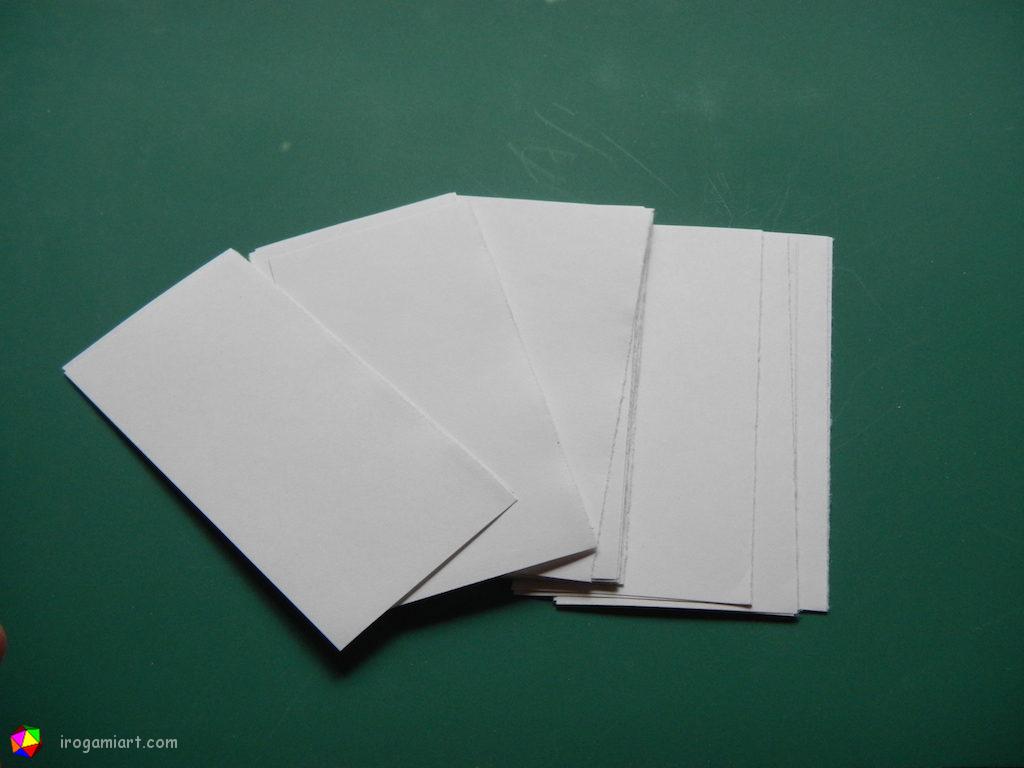
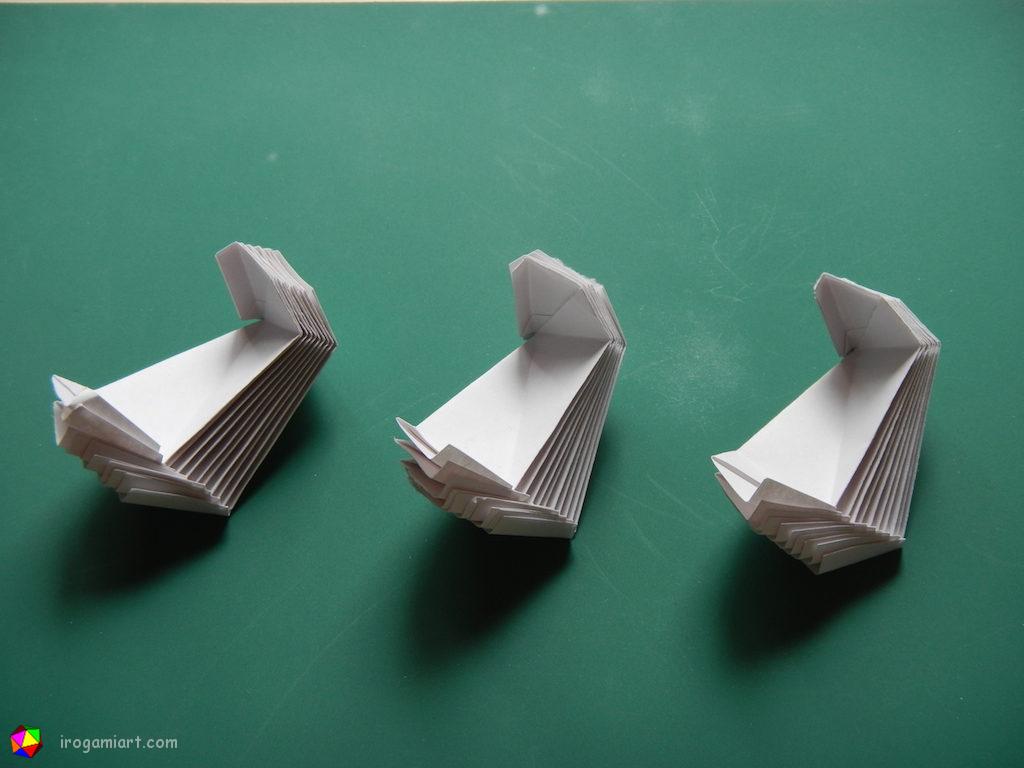
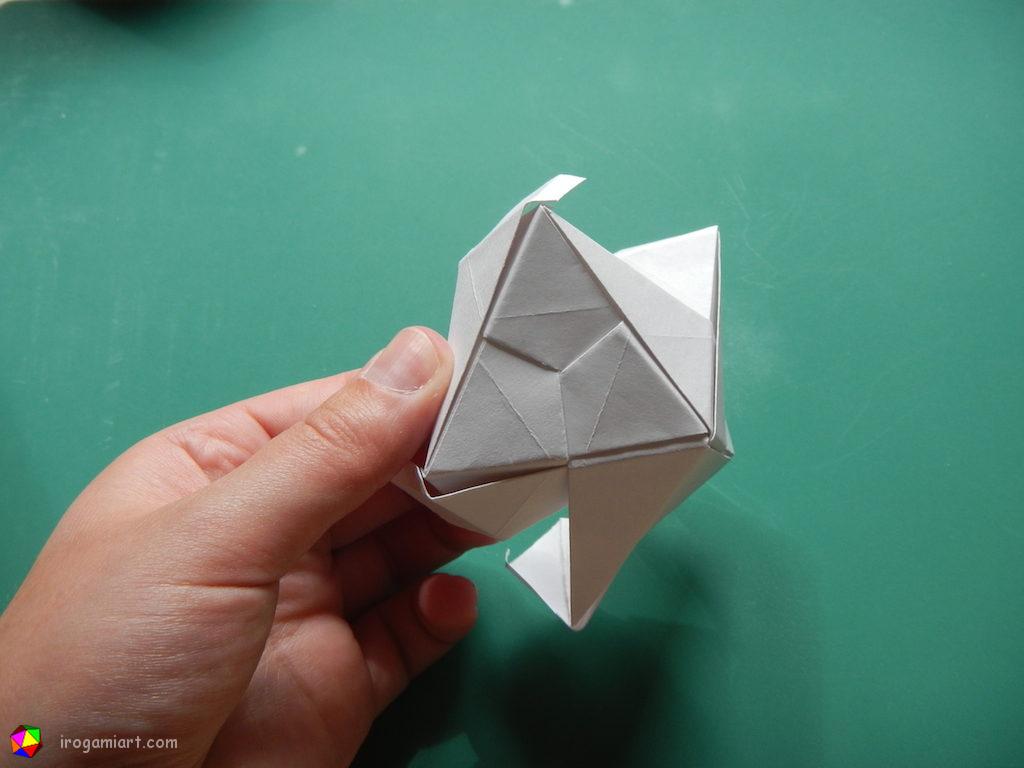
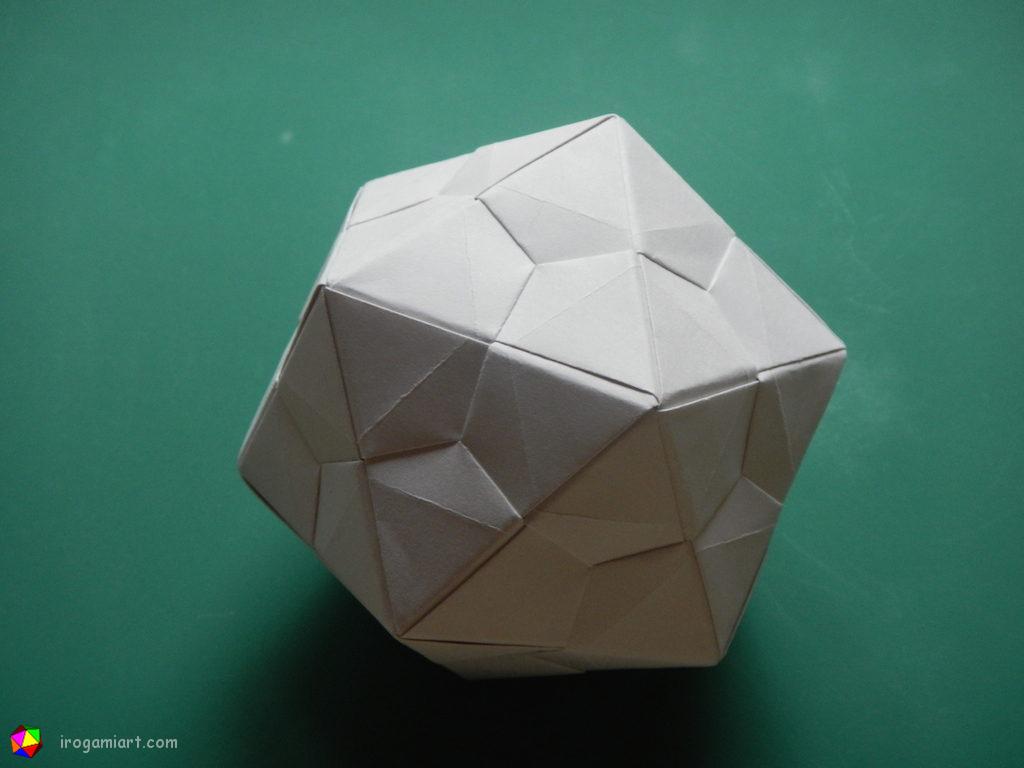
These five pictures only provide a rather coarse description. For those who want to know more, visit Irogamiart’s Youtube Channel.
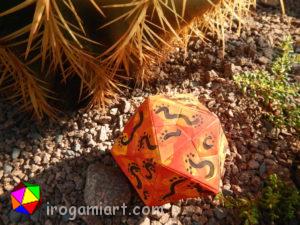
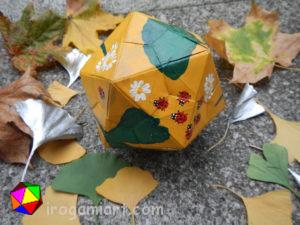
The Icosahedron consists of 30 similar modules assembled in a 3D figure. After that, the icosahedron is individually painted. Folding and assembly normally take about 60 minutes, painting time however, varies in terms of the motive.
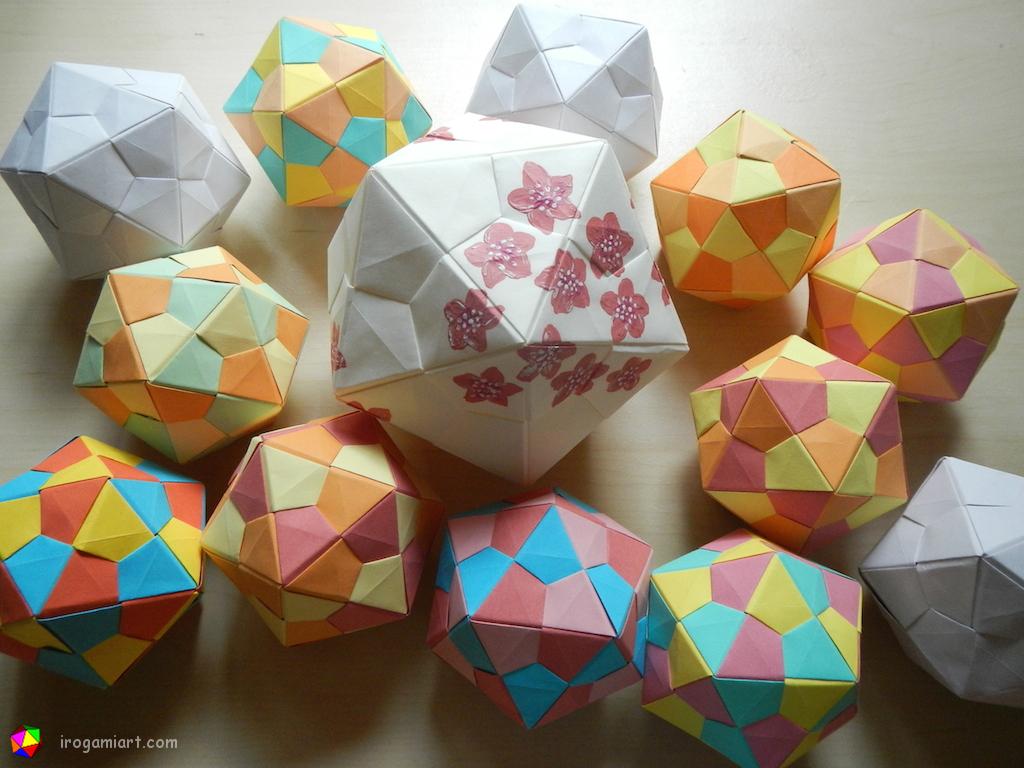
There are multiple applications for icosahedrons, for example for decoration at home or a unique present for a good friend.
I also have a small collection of other origami models.
 Maths 3D
Origami is maths. The Icosahedron (greek.: „20 plains“) is a polyhedron and a polygon consisting of 20 equilateral triangular plains, 30 edges and 12 angles.
There are more platonic bodies consisting of less than 30 modules:
Body Angles Plains Edges/ Modules
Tetrahedron 4 4 6
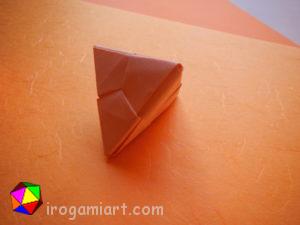
Body Angles Plains Edges/ Modules
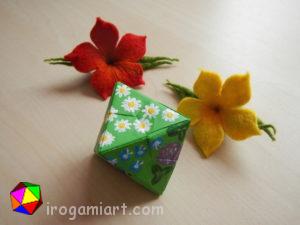
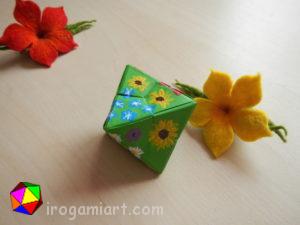
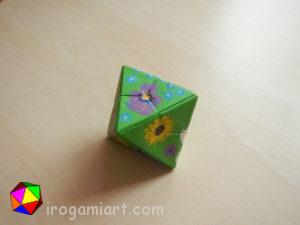
Octahedron 6 8 12
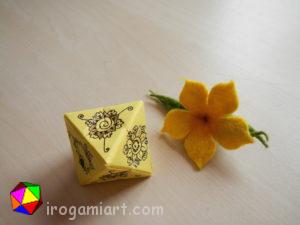
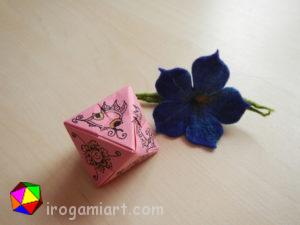
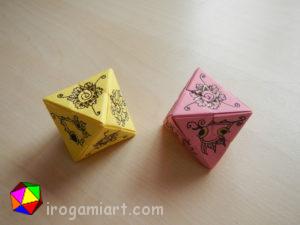
Body Angles Plains Edges/ Modules
Icosahedron 12 20 30
There is a connection between the number of modules and the number of plains: 2/3 of the number of modules make the number of plains.
Tetrahedron: 6 Modules, 4 Plains
Octahedron: 12 Modules, 8 Plains
Icosahedron: 30 Modules, 20 Plains
What’s the next step? Exintahedron
Back to gallery.